By Elizabeth Henderson, Northeast Organic Farming Association (NOFA) of New York
(Note: Family Farm Defenders opposes this expansion of H2A – our position is that we need a secure path to citizenship for ALL undocumented farmworker immigrants in the U.S.)
This bill, recently introduced by House Agriculture Committee Chairman Glenn “GT” Thompson (R-PA), claims to correct the problems for agriculture that current administration policies on immigration have created.
But it goes much further to cement the exploitative working conditions, low wages and disempowerment of farmworkers that undermine the sustainability, not to mention the social justice, of agriculture in the US. SAWA include processing workers as well as farmworkers in the H2A category, expands contracts from a maximum of 10 months to 3 years, allows staggered entry of workers to suit a farmers’ schedule, permitting them to shift from one certified farm or Farm Labor Contractor to another, and streamlines the whole application process that has taken up to 3 months involving contacts with five different government agencies into one on-line platform. To further consolidate and rationalize the system, SAWA charges the Secretary of Labor with creating an on-line registry of farm jobs and database of all H2A jobs.
One big plus, unlike the Farm Workforce Modernization Act on which it is based, SAWA does not require mandatory E-verify for all of agriculture that would have led to the deportation of many farmworkers.
The article on SAWA in Civil Eats (https://civileats.com/2026/06/30/house-agriculture-chair-introduces-controversial-farm-labor-bill/ ) does not give a full picture of how bad it is for farmworkers. SAWA builds on the reduction in wages already implemented by the Department of Labor that changed the method for calculating the Adverse Effect Wage Rate (AEWR) cutting H2A wages by $3 to $5 an hour, depending on the state.
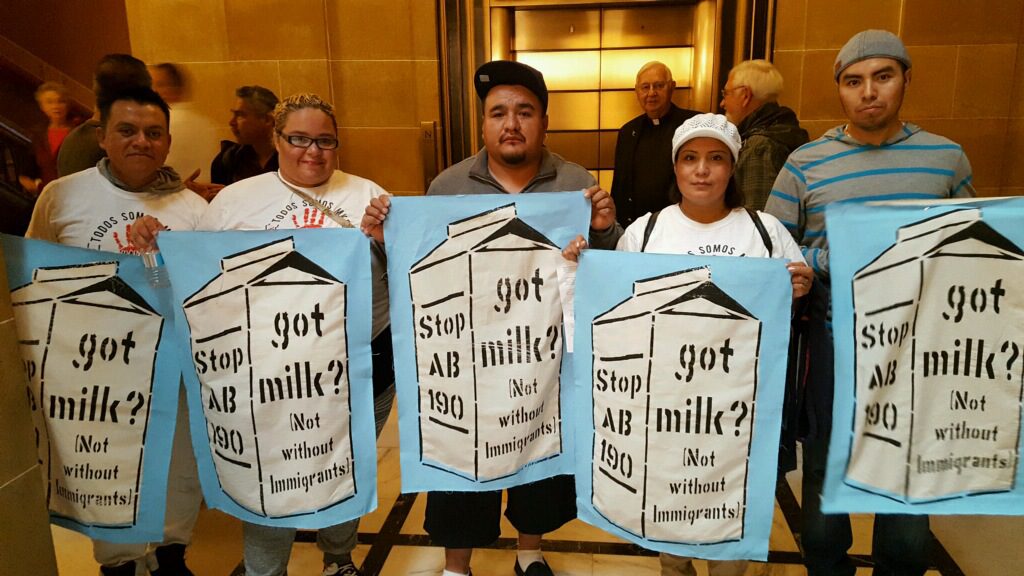
SAWA does provide a way for farmworkers who have been working without full legal status to qualify as H2A workers without leaving the country. However, to qualify for a waiver of deportation, current farmworkers not only have to document with the help of their employer that they worked 5.75 hours a day for 180 days over 2 years, they must also never have accessed any public benefits or have any record of other crimes besides working illegally. There is no mention of the fate of other members of farmworker families.
The bill lets employers who previously employed undocumented workers off the hook for the felony charge this would currently entail.
Upon termination, H2A workers have 30 days to leave the country.
Responding to farmer complaints during the most recent government shut-down, processing of H2A applications will continue even if the government does not pay DOL bureaucrats and shuts down!
On wages, SAWA establishes two tiers – entry level with a lower base wage and specialized skills with a higher wage, but there is an additional nasty twist. If an employer would have hired an unskilled person for a job classified as entry level, but hires someone with years of experience, they can still pay the wage they would have paid to a totally inexperienced worker. (You have so stay up late at night to conjure up these miserly measures.)
In Thompson’s introduction to the bill, he responds to farmer complaints of uncertainty about the required wage rate: “Wages for H-2A workers are calculated based on the Adverse Effect Wage Rate (AEWR), a minimum wage originally designed to ensure domestic workers were not undercut by foreign laborers. Dubious methodologies saw this rate skyrocket from 2010-2025—in this time period, the increases to the AEWR outpaced inflation by 70%.” The historical record show, however, that DOL under Biden was making an effort to raise farmworker wages from the federal minimum of $7.25 to something resembling a living wage. The loudest complaints came from farmers and especially Farm Labor Contractors who had been enjoying their freedom to outrageous exploitation. The bill also responds to complaints of uncertainty about the required wage rate by requiring that the wage rate cannot go more than 1.5% lower or 3.25% higher than the previous year.
As under the current system, employers must provide housing and the housing must be inspected by state entities using state standards for health and safety if they exist or, in the absence of state standards, the federal requirements. However, the employer is longer required to provide the housing free of charge. The Secretary of Labor will set the maximum daily charge with a formula for calculating it (See text of bill p. 6: section E Provision Expense).
Requiring that employers demonstrate some attempt to hire locals, SAWA continues the fiction that H2A workers are not taking jobs from US citizens. And if a local pops up before the H2A workers start their journey, the farm must cancel the H2A visa. The huge growth in H2A visas to over 400,000 in 2025 suggests that no one is making a genuine effort to make farmwork a respected vocation that attracts citizens.
Employer certification to hire H2A is renewable and may be filed by two or more employers in association or by cooperatives. If a group is the “permitted filer” and is barred from certification by abusing workers, the individual farms in the group can still continue in the program.
The bill does not require employers to provide a set number of hours of work. There is no weekly minimum or maximum – but does requires at least 1 hour during every 30-day period.
Thompson responds to news of worker deaths from heat exposure by requiring that H2A certified farms have a heat plan. With unabashed cynicism, the bill calls for “prevention measures that are at least as protective as the applicable Federal and State requirements” and post it where workers can see it. The authors are surely aware that neither the feds nor most states have heat protection legislation. No enforcement of the heat plan is required either.
In the definitions section, SAWA expands agriculture by modifying the definition in the Fair Labor Standards Act which reads:
“The definition of agriculture under the FLSA has two distinct branches: primary agriculture and secondary agriculture.
- Primary agriculture includes farming in all its branches (e.g., the cultivation and tillage of the soil; dairying; the production, cultivation, growing, and harvesting of any agricultural or horticultural commodities; and the raising of livestock, bees, fur-bearing animals, or poultry).
- Secondary agriculture includes all practices, including forestry or lumbering operations, performed by a farmer or on a farm, and as an incident to or in conjunction with such farming operations. For example, a farm’s activities of cutting or freezing its own (i.e., those produced or raised by the farmer or on its farm) fruits, vegetables, and meat, without adding any ingredients, may be secondary agriculture.
Employment that is not within the scope of either primary or secondary agriculture is not employment in agriculture under the FLSA.”
SAWA, separates agricultural activities from the farm and would seem to include trucking, seafood processing and meat processing:
‘‘(C) the handling, planting, drying, packing, packaging, processing, freezing, or grading of any agricultural or horticultural commodity in its unmanufactured state, without regard to the ownership or location of such facilities or activities;
‘‘(D) the transportation and preparation for transportation of any agricultural or horticultural commodity, in its unmanufactured state from the farm to the place of storage, first processing or first marketing;
‘‘(F) aquaculture activities, including the primary processing of seafood;
‘‘(J) the harvest and processing of meat and poultry, which shall only include the slaughter of animals and the breakdown of carcasses.”
There is no question that Thompson’s bill responds to the urgent requests of mainstream agriculture. The American Farm Bureau and an assortment of 400 agriculture organizations endorse it. Like sugar, exploitation is addictive. Yet like too much sugar in your diet, stealing from the most marginalized makes US agriculture sick. How collaborative do you imagine relations will be on the farms that invite the H2A workers they depend on to return for a lower wage? The growing movement of workers across the food chain and the many people who want healthy food must reject SAWA along with the Republican House and Senate draft Farm Bills. Another agriculture is possible!