Opposition to ICE crackdown might be bigger than you think

By: Anthony Pahnke, FFD Vice President and Associate Professor of International Relations at San Francisco State University.

Originally published by the Captimes (Madison, WI), 3/13/2025
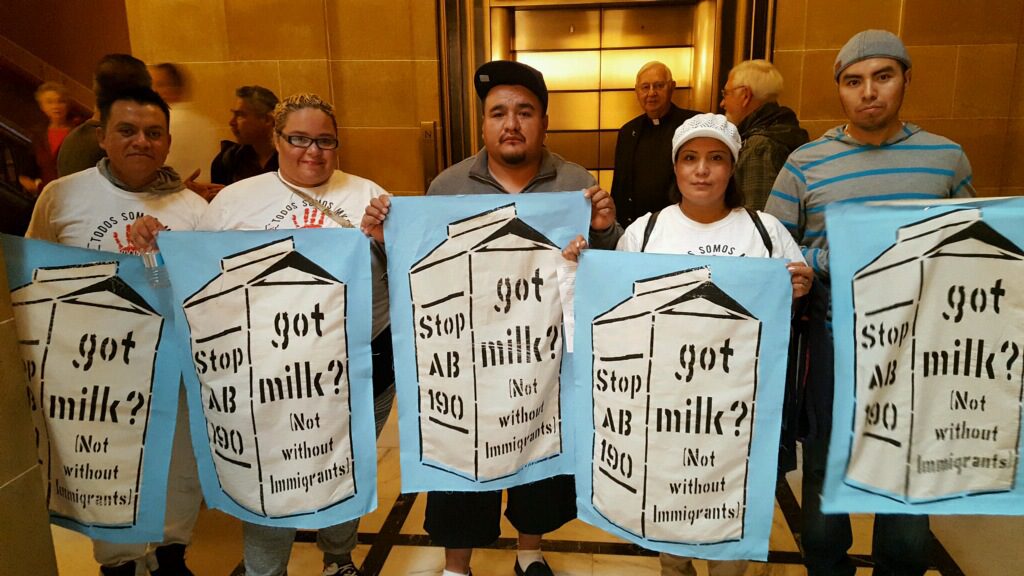
Dairy Farmers and Dairy Farm Workers Join Together for Immigrant Rights Protest – WI State Capitol

About 100 people, including myself, my mother, faith leaders, some farmers and other community members from Wisconsin, joined an evening call a few weeks ago that had been organized by the interfaith group, WISDOM.

The topic: challenging 287g agreements.

Such agreements have become central to immigration policy debates, as they allow Immigration and Customs Enforcement (ICE) to deputize local law enforcement to carry out President Trump’s plans for mass deportation.

Across the United States, 137 counties have signed up, including eight in Wisconsin. Lacking the resources and manpower to deport the estimated 11 million people who are in the U.S. without legal status, and with personnel challenges plaguing the Trump administration’s immigration plans the first time the Republican was in office, these agreements are critical to the government’s intention to increase arrests.

On our call, we discussed which sheriffs to contact, how to speak to them about the problems of working with ICE, and the need to continue to educate immigrants on their rights.

What really surprised me about that call was how so many different people were organizing to challenge a critical piece of the Trump agenda. Motivating us, at least my mother and me, was a strong sense of community that led our family to fight for one another in the past and that still pushes us to take a stand with the most vulnerable among us. In addition to economic considerations, we demand respect and dignity for all, including for immigrants, regardless of their legal status.

My mother lives on the dairy farm where we both grew up. Located in eastern Wisconsin, the dairy industry there and throughout the state has changed significantly over the past few decades. While in the past we milked cows with other family members, now undocumented workers mostly tend to the cattle.

Reports show that if mass deportation took place, Wisconsin’s dairies would be hit hard as no visa program exists for dairy workers and upwards of 70% lack legal status. With 5,661 operating dairies in the state, a 46% decrease from just over 10 years ago, farms have decreased in number while increasing in size and growing dependent on non-family labor.

At the same time, debates about the place of immigrants in our agricultural system are about more than dollars and cents.

Back in the 1960s, my grandfather dumped milk as part of the National Farmers Organization’s (NFO) efforts to raise public awareness and pressure lawmakers to improve milk prices to keep families on the land. Then, similar to the struggle for immigrant rights now, there were serious economic challenges in our community. But also at issue was respect and dignity, as the farmers who were putting the food on Americans’ tables deserved the means to provide a decent life for themselves.

What has remained the same over time is that those directly engaged in agriculture are on the frontlines to protect the land, care for the animals and provide us with food. Accordingly, both farmers and workers deserve not only decent incomes, but safety and security.

We find the opposite in programs like 287g. From increasing racial profiling, to causing undue financial problems for the counties that collaborate, the initiative strikes fear in immigrant families. The program has nothing to do with “going after the worst first” and targeting violent criminals as it overburdens our local law enforcement officers by making them do the job of federal agents.

The reasons that people come into the U.S. are many, including escaping war and poverty. As the vast majority commit crimes at lower rates than native-born citizens, they deserve better than to live in fear.

So until we have politicians willing to respect the millions of undocumented people in this country with real policies that could include worker visas or immigration reform, including for those who make our food system work, we will continue to have calls and organize for change.
Posted in Uncategorized | Comments Off on Opposition to ICE crackdown might be bigger than you think

Fundraiser for Gaza – FFD is Offering Palestine Solidarity Seed Packs for Spring 2025!

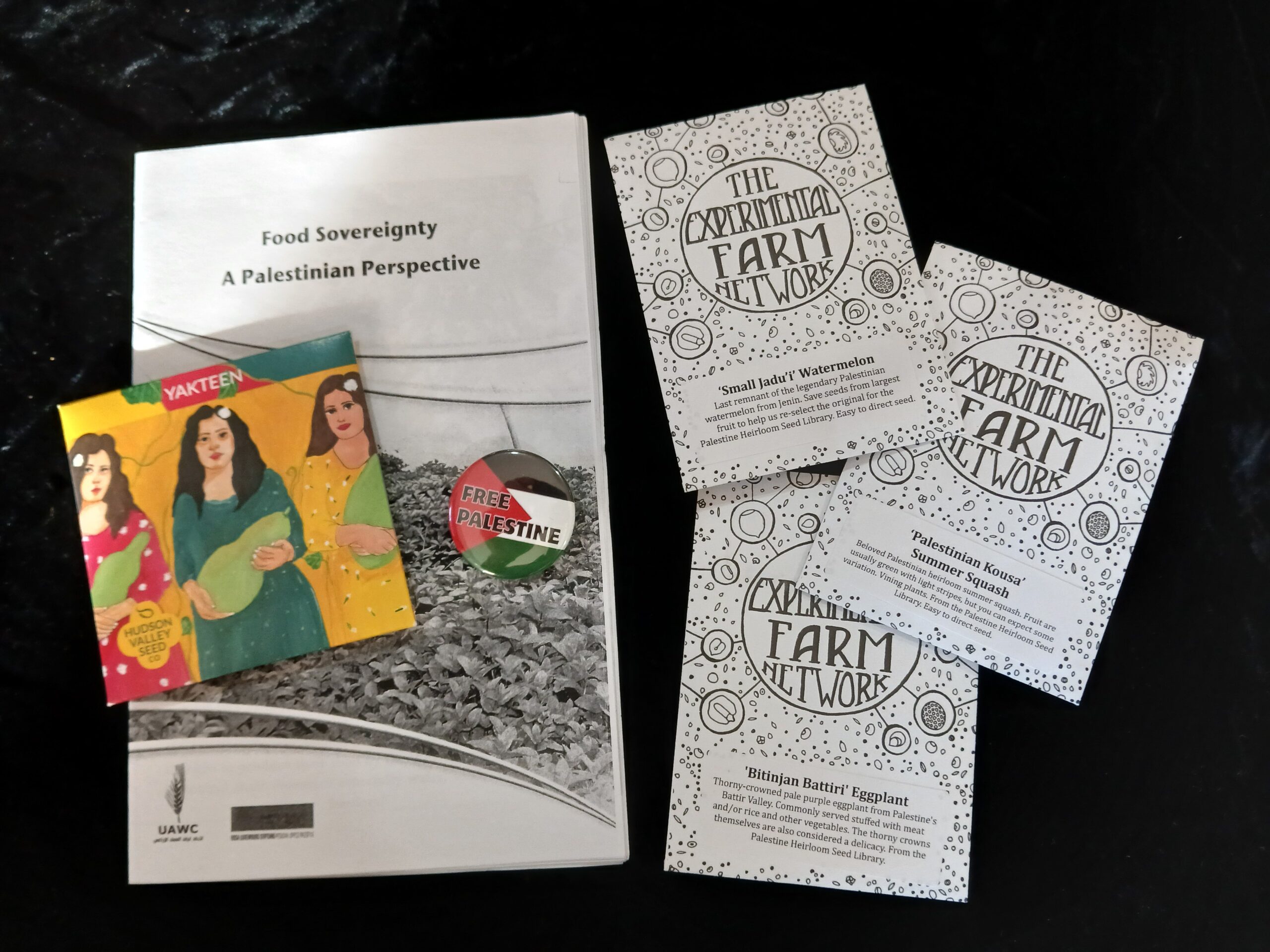
As we all know, the ceasefire in Gaza is just the beginning and the future of the region still depends on international solidarity. You can grow hope and change in your garden and help us raise funds in this critical moment. Proceeds will benefit Palestinian farmer members of La Via Campesina (LVC). Our suggested donation is $50 and includes shipping.

The Palestine Seed Solidarity Pack includes

Four types of heirloom seeds:

  • Britijan Battari eggplant
  • Jarjir arugula,
  • Kousa summer squash,
  • Yakteen gourd  PLUS:
  • Palestine Food Sovereignty ‘zine
  • FFD’s “Food is not a Weapon” Gaza Solidarity Statement
  • Latest Stop Gaza Starvation Update
  • Free Palestine button

You can make a secure online donation using the Mighty Cause donation button on our website or by sending a check to: Family Farm Defenders, P.O. Box 1772, Madison WI 53701

And, if you are placing an order, please email familyfarmdefenders@yahoo.com to let us know where to send your solidarity package. It is time to grow peace in Palestine and beyond!

Posted in Uncategorized | Comments Off on Fundraiser for Gaza – FFD is Offering Palestine Solidarity Seed Packs for Spring 2025!

See last month’s electronic newsletter – and sign up for future editions!

This November, we debuted our first electronic newsletter. The electronic newsletter is a resource to share upcoming events, calls to actions, and news we’re following.

Click here to read FFD Newsletter #1: Say No to GE Wheat! (11-14-2024 )


Sign up for future newsletters!

Posted in Uncategorized | Comments Off on See last month’s electronic newsletter – and sign up for future editions!

How RFK Jr. Could Actually Reform Industrial Agriculture

By: Anthony Pahnke, vice president of Family Farm Defenders and an associate professor of international relations at San Francisco State University in San Francisco.

Originally published by the Hill, 12/16/2024

At first glance, there’s not a lot of promise for farm system advocates with the incoming Trump administration.

Take, for instance, Trump’s pick to serve as Agriculture secretary, Brooke Rollins. The section dedicated to agriculture on the web page of the America First Policy Institute, where Rollins served as CEO, has almost nothing on food or farming. In fact, the little that does appear there deals with energy policy, making it seem that U.S. agriculture should be more about oil exploration than growing food.

And if Trump’s first term is any sign of what’s to come, then we can expect a series of taxpayer-subsidized payments to offset losses that will be incurred during trade war 2.0.

Meanwhile, from 2012 to 2022, the U.S. lost over 200,000 farms —  about 10 percent of the country’s total. The only operations that increased in number during that time were megafarms that raked in more than $1 million a year in revenue, going from 81,660 in 2012, to 107,952 in 2022. Small and medium farms were decimated. With our food system becoming more and more dependent on imports, large-scale factory style operations and global suppliers make up our increasingly industrialized food system.

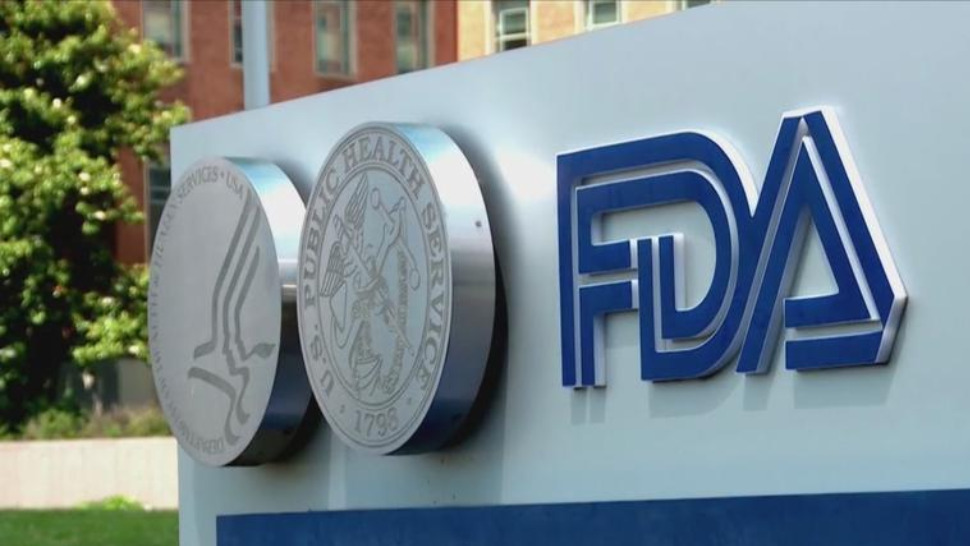
Such developments make Robert F. Kennedy Jr. taking the helm at the Department of Health and Human Services that much more important. For all the hubbub surrounding his stances on vaccines or flouride in water, his condemnation of pesticides and opposition to food additives makes it clear that he believes our industrial agricultural system needs serious reform. Towards that aim, if RFK Jr. wants to make real change, he ought to consider using his full powers at the Food and Drug Administration to go after facilities abroad, as well as check the power of unregulated factory farms stateside.

First, the American system is one of checks and balances. No agency or department controls any one policy area entirely, including agriculture. This means that although the Department of Agriculture is primarily in charge of farm policy, the FDA, which is within Health and Human Services, also has some responsibilities in governing our food system. 

The legislation that grants the FDA power in agriculture is not the farm bill, but the Pure Food and Drug Act of 1906. This act is one of many progressive-era laws that sought to protect consumers from corporate abuses of power. Subsequennt laws expanded its power in terms of conducting inspections and issuing rules for industry. 

In terms of specifics, the FDA under RFK Jr. could get more involved in addressing problems in our industrialized food system by conducting more inspections of farms and facilities — particularly foreign ones.   

On this note, China deserves attention.

While receiving more attention for what we export to them, China is actually the third largest supplier of agricultural goods to the U.S., trailing only Mexico and Canada. This is especially true with seafood, with about 80% coming from abroad, including from Chinese firms.

The FDA has the power not only to inspect foreign facilities where food (including seafood) is processed, but also to file injunctions and enter into criminal proceedings against firms that break labor laws. Reports have already disclosed forced labor in China is being used to supply seafood. The FDA under RFK Jr. could conduct more investigations on such firms abroad, where cheap labor may be making fish cheaper than what American fishers can sell it for.

Stateside, the FDA could do more with regulating factory farms in terms of water contamination.

While also the province of the EPA, the FDA does have a stake in overseeing environmental contamination if there is a potential impact on consumer health. The recent multistate E Coli outbreak with McDonalds onions is just one example of the FDA, along with the CDC, analyzing one example of something going wrong with the food system. The point with such investigations is not just to point blame and punish wrongdoing, but also to prevent future disasters.

On water contamination particularly, a coalition of consumer and environmental groups urged the EPA to strengthen its factory farm water pollution regulations under the Clean Water Act. Of particular note is how an estimated 10,000 operations nationwide discharge waste water illegally without permits. Despite their very real concerns, their petition was denied last year.

On this point, the FDA could continue this investigation. It has the authority to investigate farms for their manure disposal and storage capacities, and as to whether they contaminate water sources. Taking up what the EPA could not, the FDA under RFK Jr. — if he really wants to reform our food system — could inspect large-scale factory farms, punishing the most egregious for harming our waterways and the environment. 

Then there is the issue of antibiotic overuse.  Earlier this year, Sen. Cory Booker (D-N.J.) sent a letter to the FDA calling for more stringent limits on the use of antibiotics on factory farms, particularly as their misuse causes antimicrobial resistance in both people and animals. The FDA, thanks to the Federal Food, Drug, and Cosmetic Act, has the power to regulate the use of drugs, such as antibiotics, in animal agriculture. Now, RFK Jr., to “make America healthy again,” has the chance to do so, setting limits on what factory farms can use.

We are told that many of Trump’s Cabinet picks, including RFK Jr., are meant to “blow up” institutions. Hyperbole aside, maybe our food system, which is experiencing the ills of relentless concentration and environmental degradation, deserves to be shaken up a bit.      

Posted in Uncategorized | Comments Off on How RFK Jr. Could Actually Reform Industrial Agriculture

Fair Trade Holiday Gift Boxes are Back for 2024!

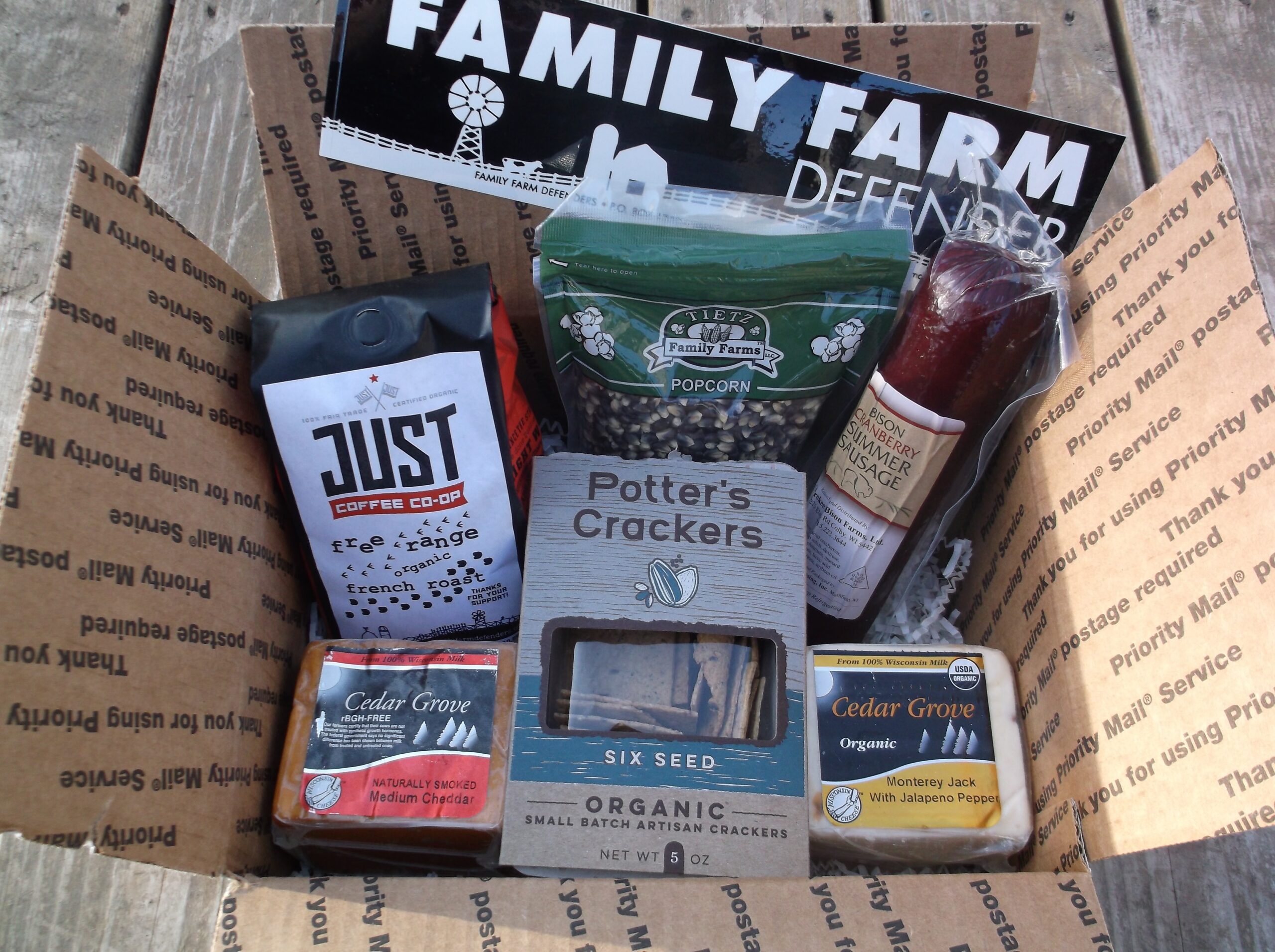
Family Farm Defenders is proud to once again offer many giftboxes you can send to your family and friends over the holiday season. We are excited to offer award-winning Cedar Grove Cheeses along with other delicious products – artisanal Potters crackers, Cherokee Farms bison sausage, organic French Roast Just Coffee, White Earth Native Harvest wild rice, Honey Acres hot mustard, Tietz Family heirloom popcorn, Driftless Organic sunflower oil, Pauls’ Seven Grain Pancake Mix, and McCloskey’s maple syrup – all of which are “fairly traded” and guarantee their small scale producers a living income. By choosing Family Farm Defenders Holiday Gift Boxes, you can help insure family farmers receive a parity price for their hardwork. This holiday season why not just “say cheese” and support Family Farm Defenders!

For more details and ordering info: https://familyfarmers.org/wp-content/uploads/2024/12/FFDHolidayGiftBoxes2024.pdf

Posted in Uncategorized | Comments Off on Fair Trade Holiday Gift Boxes are Back for 2024!